
Lewis Hamilton’s recent admission that Ferrari’s simulator work does not always translate accurately to real-world performance reignited a debate that has quietly existed within Formula 1 for years. In an era where teams invest millions into virtual development environments, can drivers trust what they learn in the simulator?
Hamilton’s answer was pretty honest. The seven-time World Champion revealed that he decided to skip simulator work before the Canadian Grand Prix after becoming frustrated by situations where promising virtual set-ups failed to deliver once he arrived at the circuit. While he remained complimentary about Ferrari’s simulator and the people behind it, Hamilton suggested that the correlation between simulation and reality can still be inconsistent.
It is a perspective shared by many experienced drivers who built their careers long before modern simulation technology became a central part of Formula 1 operations. For them, feeling the car through the seat remains the ultimate reference point. Yet a different viewpoint is emerging from a younger generation of drivers who have grown up in a digital racing environment.
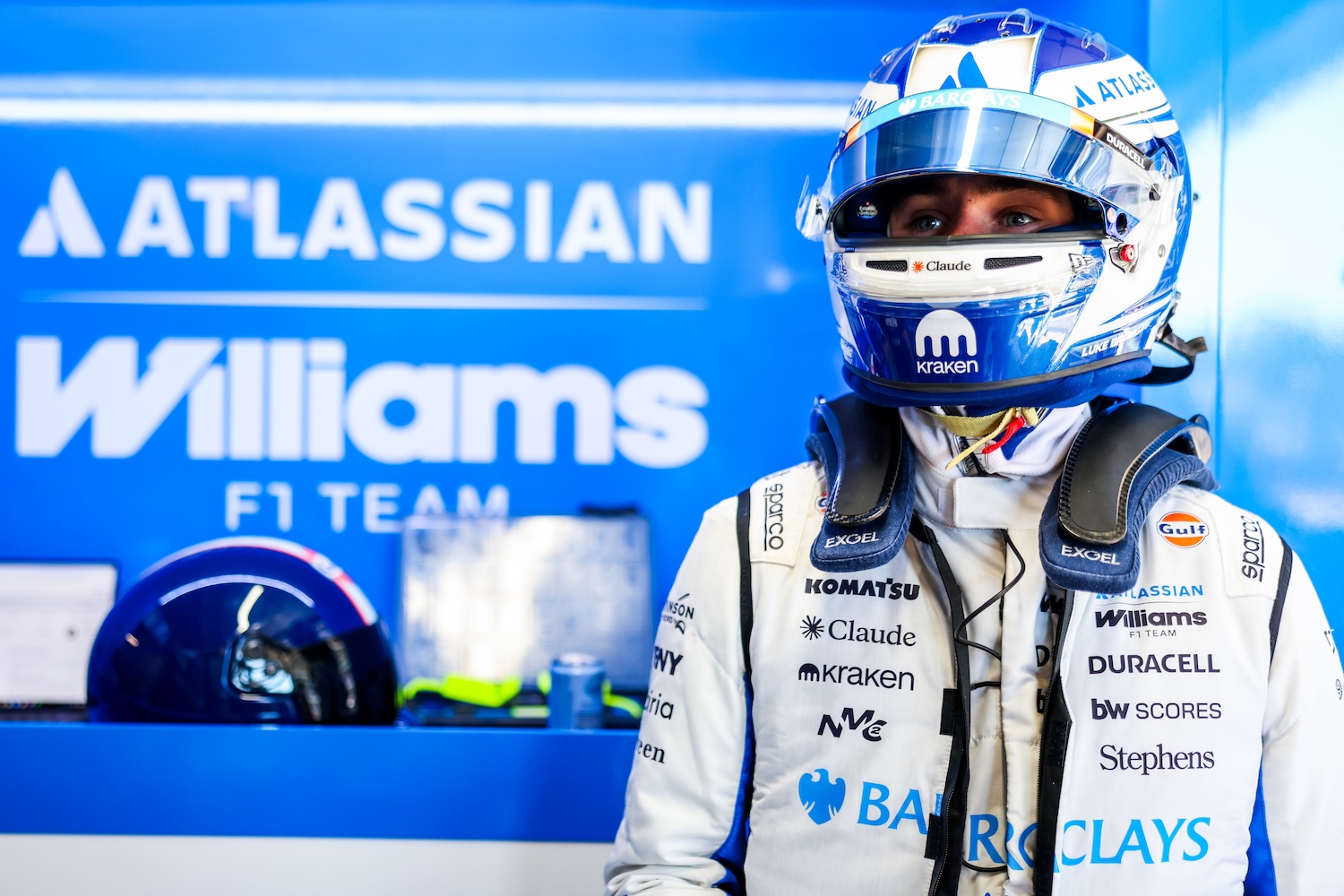
Williams Academy driver Luke Browning, speaking exclusively to Paddock Magazine in Monaco, believes modern simulators have reached an extraordinary level of sophistication.
“I got my opportunity through sim, and I can see through my eyes on the simulator in a lot of ways,” Browning explained. “Some of the old-school drivers really need to feel through their bum, whereas some of the simulation software we’ve got now is just fantastic.”
“We’ve got one of the highest-tech simulators in the whole grid.” – Luke Browning
The 24-year-old has witnessed Williams’ recent technological transformation firsthand. Having spent extensive time at the Grove factory since early 2024, Browning has seen major investments arrive, including the team’s latest simulator infrastructure.
According to him, the technology now plays a central role in Williams’ long-term ambitions.
“We’ve got one of the highest-tech simulators in the whole grid,” he said. “It was a big investment for the team, and it’s fantastic.”
Browning even pointed to feedback from Carlos Sainz, who reportedly described the correlation between simulator and track performance as among the best he has experienced.
The debate is no longer about whether simulators matter. Every Formula 1 team relies heavily on them for development, preparation and performance analysis. Hamilton’s experience shows that even the most advanced technology still has limitations. Browning’s confidence demonstrates just how far that technology has come.