
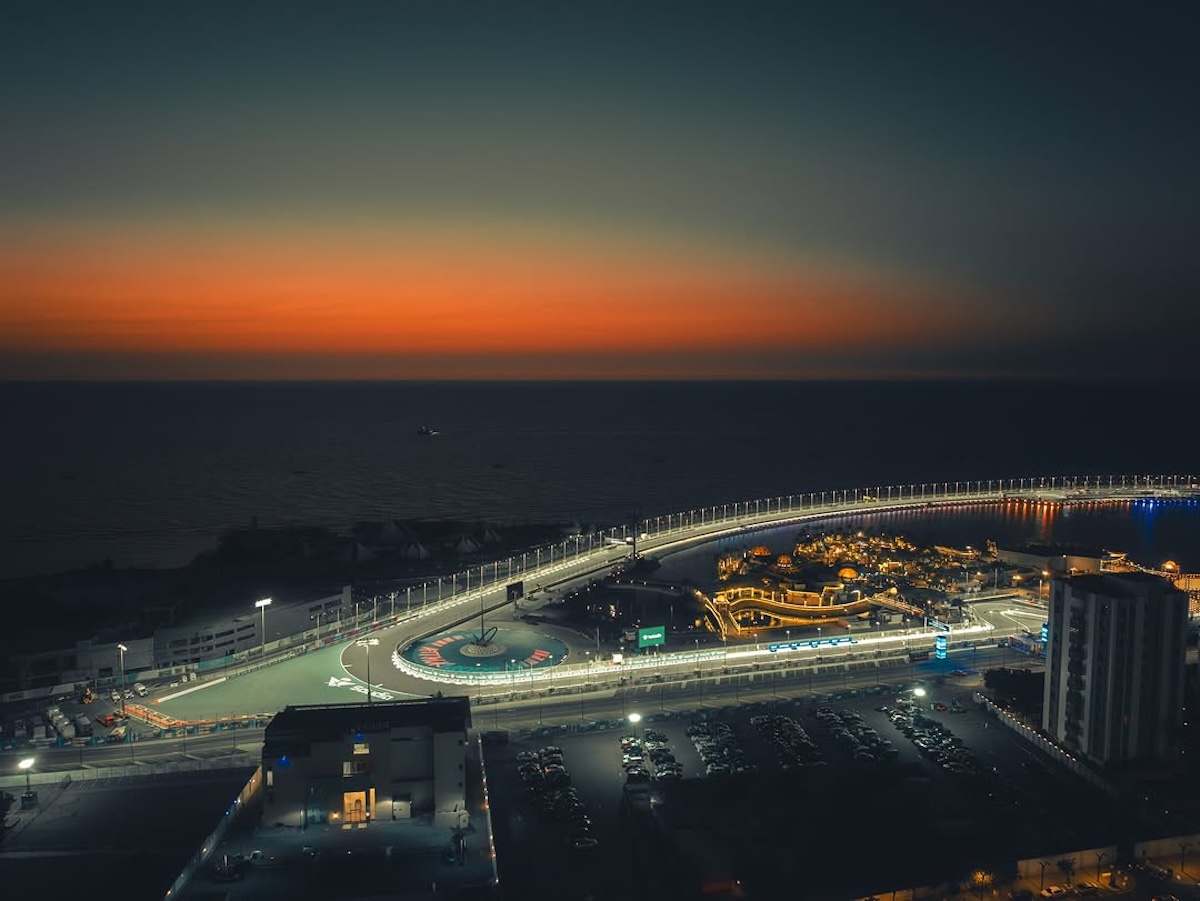
In the high-stakes theatre of Formula 1, the “Red Flag” is the ultimate disruptor. Usually, it’s triggered by a carbon-fibre graveyard at Sainte-Dévote or a monsoon in Suzuka. But as we navigate this 2026 season, the red flags are no longer being waved by marshals in fireproof suits; they are being hoisted by the grim machinery of regional war. The sport spent years trying to outrun its geopolitical shadows, but in April 2026, those shadows finally caught up. The outbreak of war in the Middle East hasn’t just rattled global energy markets; it has shattered the glass floor of F1’s gleaming commercial skyscraper.
The most jarring blow came with the official cancellation of the Bahrain and Saudi Arabian Grands Prix. This wasn’t a mere scheduling hiatus; it was a total blackout of the month of April.
After the engines cooled at Suzuka on March 29, the paddock was met with a deafening five-week silence before Miami. The financial debris from these cancellations is staggering. Bahrain and Saudi Arabia represent two of the most lucrative contracts on the calendar, and by scrubbing these rounds, F1 has effectively walked away from a guaranteed $132 million in hosting fees, with Guggenheim analysts projecting the total revenue hit—including lost hospitality and broadcast surcharges—could reach close to $200 million.
For the teams, this isn’t just a loss on a balance sheet; it’s a direct hit to the prize pot, complicating development cycles for the radical 2026 regulation changes just as they were gaining momentum. The impact ripples through the very ownership structure of the sport, as Liberty Media’s market value evaporated by nearly $2 billion earlier this year when investors panicked over F1’s heavy reliance on Middle Eastern stability. With the season finale still currently tethered to Qatar and Abu Dhabi, F1 is holding a high-performance engine that is dangerously close to overheating. Logistically, the “Business of Speed” has become a business of survival; airspace closures have forced teams to reroute millions of tonnes of equipment, driving up “emergency logistics” costs that threaten to collide with the FIA’s strict budget cap.
This brings us to a crossroads where strategy can no longer be dictated solely by the highest bidder; it must be defined by geopolitical resilience. To protect its $3.2 billion annual revenue stream, the sport must pivot towards a more balanced global portfolio.
This could mean anchoring the calendar in the untapped stability of the Global South, specifically through the proposed 10-year deal in Barranquilla, Colombia, while finally reinforcing the sport’s bedrock. A South American “swing”, including a return to Argentina, or a permanent presence in South Africa via Kyalami, would help balance the calendar against the unpredictability of the East.
We can no longer treat heritage cathedrals like Spa, Silverstone, and Monza as disposable relics; they are F1’s ultimate insurance policy, offering the logistical certainty and regional safety that no amount of petrodollars can buy when the world catches fire.
Formula 1 is a business built on the illusion of total control, down to the last thousandth of a millimetre on a front wing. But as smoke rises over the Gulf, the sport is being reminded that it is ultimately a passenger to history. If the “Global Circus” wants to keep the lights on, it must stop behaving like a nomad chasing the largest cheque and start prioritising territories that offer a safe place to race.